


HOW TO PLAY
Mahjong Instructions
This set contains everything needed to play both American Mahjong and Chinese Mahjong. Start with the tile guide below, then follow the rules for the version you’re playing.
Jump to American Mahjong or Chinese Mahjong.
INCLUDED IN THE SET
1
Lacquered Box
164
TILES
2
DICE
1
WIND INDICATOR
Tile Types
This set contains everything needed to play both American Mahjong and Chinese Mahjong.
Suits
36 tiles per suit: 4 of each tile numbered 1–9.
Character Tiles (Craks)




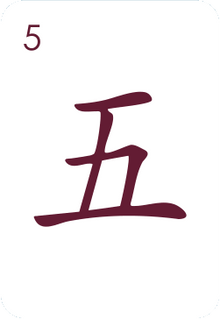
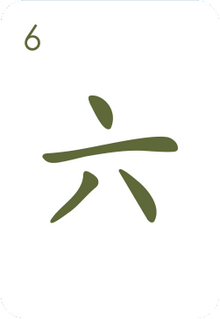
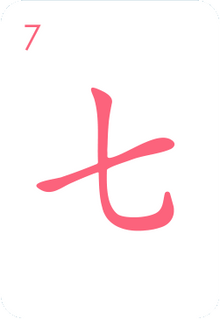


Bamboo Tiles (Bams)


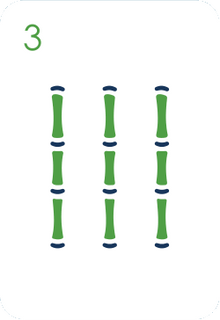
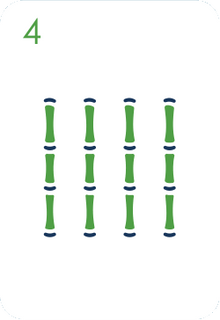
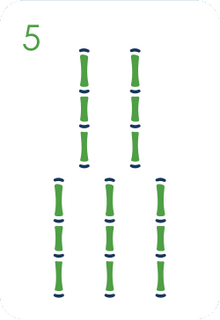


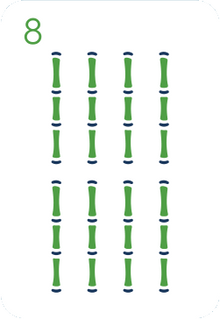
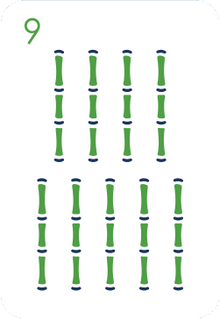
Circle Tiles (Dots)





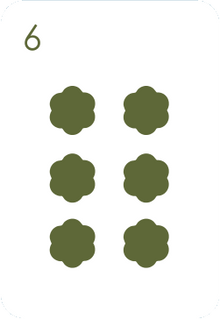



Wind tiles
16 tiles total: 4 of each North, East, South and West.




Dragon tiles
12 tiles total: 4 of each Red, Green and White Dragons.



In American Mahjong, Dragons are matched to a suit:
- Green Dragon = Bamboo (Bams)
- Red Dragon = Characters (Craks)
- White Dragon (“Soap”) = Dots or Zero
These suit matches are used when completing hands shown on the NMJL Card. The White Dragon (“Soap”) is the only tile with a double purpose and may be used as a Zero on the NMJL card.
Flower tiles
8 Flowers.


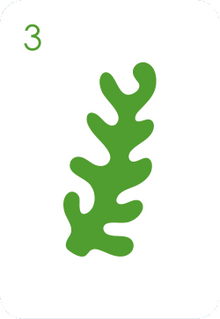
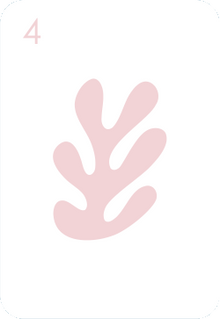

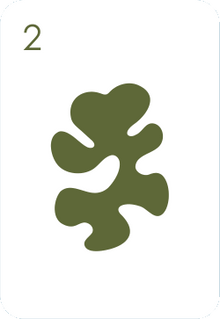


In American Mahjong, all Flower tiles are interchangeable, regardless of their number, colour or season.
Season tiles
Winter, Spring, Summer, Autumn.




Season tiles are not used in American Mahjong and only used for Chinese Mahjong.
Joker tiles
10 Joker tiles are included in this set to accommodate different styles of play.


Standard NMJL American Mahjong is played using 8 Jokers. Jokers are not used in Chinese Mahjong.
Blank tiles
6 blank tiles are included as replacement tiles in case any tiles are lost.
Blank tiles are not used during play.
Part one
American Mahjong
Setting up the game for standard NMJL American Mahjong.
Use
- Suits
- Winds
- Dragons
- 8 Flowers
- 8 Jokers
Remove
- Seasons
- Blank tiles
- Wind indicator
- 2 Jokers
You should have
152
tiles
- Play with
- The official National Mah Jongg League (NMJL) Card.
- Goal
- To complete a valid 14-tile hand shown on the NMJL card.

01
Choosing East (dealer)
Each player rolls two dice and the player with the highest total becomes East. If there is a tie, those players roll again until one player has the highest total.
The dealer (East) rotates counterclockwise to the next player after each round.

02
Building the wall
All tiles are shuffled face down in the centre of the table before the walls are built. Using the shuffled tiles, each player builds a wall in front of their pusher.
Each player builds a wall of:
- 19 stacks long
- 2 tiles high
(38 tiles per player)

03
Using your pusher
The pusher is used to gently move a wall of tiles towards the centre of the table when that wall is ready to be used.
East’s wall is pushed forward first, as the deal begins from East’s wall. Once all the tiles from East’s wall have been used, the player to East’s left pushes their wall towards the centre. Players continue pushing their own walls in clockwise order.
When a player pushes, or “curtsies”, their wall, they move the right end of the pusher towards the centre of the table at a 45-degree angle.
The final stack on the left may be turned perpendicular to the wall as a reminder to deal or draw tiles from right to left. This is called “putting the tail on the dragon.”

04
Breaking the wall
“Breaking the wall” is the process of selecting a point in the wall and separating the tiles to create the opening from which dealing begins.
- East rolls one or two dice.
- Starting at the right end of East’s wall, count the number rolled in two-tile stacks, moving towards the left.
- Break the wall at that point.
- The counted stacks remain on the right-hand side of the break, against East’s pusher. These tiles are not used during the deal and are used last during game play.

05
Dealing the tiles
After the wall has been broken, dealing begins with the first stack to the right of the break.
- East takes 2 stacks (4 tiles) and places them in front of themselves.
- Moving counterclockwise, each player takes 2 stacks (4 tiles) in turn.
- Repeat this process until every player has 12 tiles.
- East then takes the 1st and 3rd top tiles, bringing their total to 14 tiles.
- The other three players take one more tile, so each player has 13 tiles.
Final tile count:
- East: 14 tiles
- All other players: 13 tiles
06
Before play begins – the Charleston
Before play begins, players exchange tiles of their choice in a series of passes called the Charleston to improve their hand. The aim is to build towards one line on the NMJL card. After each pass, keep useful tiles and pass tiles that do not help your hand.
- Players pass tiles face down and simultaneously.
- Jokers cannot be passed.
First Charleston (Required)
Pass:
- 3 tiles to the right.
- 3 tiles over (across).
- 3 tiles to the left.
Players may use newly received tiles in the next pass.
Second Charleston (Optional) - The second Charleston is played only if all four players agree.
Pass:
- 3 tiles to the left.
- 3 tiles over (across).
- 3 tiles to the right.
The first two Charleston passes are commonly remembered as R-O-L-L-E-R:
- R-O-L = Right Over Left
- L-O-R = Left Over Right
Courtesy Pass (Optional)
After the Charleston, players sitting opposite each other may exchange 0–3 tiles. Both players must agree how many tiles to exchange. The exchange is limited to the lowest number agreed by both players.

07
Starting play
East begins by discarding one tile face up.
The player to East’s right continues play.
On your turn
- Draw: Take the next available tile from the wall.
- Rack: Arrange your tiles to build or improve your combinations.
- Discard: Place one tile from your hand face up in the centre of the table.
To “rack” means to place the tile you have drawn onto your rack.
Players always hold:
- 14 tiles during their turn.
- 13 tiles after discarding.
TILE COMBINATIONS ON THE NMJL CARD
2
PAIR · IDENTICAL TILES
3
PUNG · IDENTICAL TILES
3+
CHOW · CONSECUTIVE NUMBERS IN THE SAME SUIT
4
KONG · IDENTICAL TILES
5
QUINT · IDENTICAL TILES, USUALLY INCLUDING AT LEAST 1 JOKER
6
SEXTET · IDENTICAL TILES, USUALLY INCLUDING AT LEAST 2 JOKERS
American Mahjong
Quick reference: from setup to play
- Build the walls
- Deal the tiles
- First Charleston – required Pass three tiles: Right – Over – Left
- Do all players agree to continue the Charleston?
-
Yes Proceed to the Second Charleston (Optional)
Pass three tiles: Left – Over – RightNo Skip the Second Charleston - Courtesy pass – optional Exchange zero to three tiles with the player opposite you. Both players must agree on the number of tiles exchanged.
- East discards one tile to begin play
- Regular play begins
- Play continues counterclockwise: Draw – Rack – Discard
AMERICAN MAHJONG
Rules in detail
When a player discards a tile, any player may claim the most recently discarded tile. A discarded tile may be claimed until the next player places their drawn tile onto their rack.
A discarded tile may only be claimed if it immediately completes one of the following:
- Pung
- Kong
- Quint
- Sextet
- Mahjong
When a discarded tile is claimed, the completed combination must be exposed by placing it on top of your rack for all players to see.
Claiming a discarded tile counts as your turn and must be followed by a discard, unless you are declaring Mahjong.
After you discard, play continues with the player to your right. Any players between the discarder and the player who claimed the tile lose their turn.
If two or more players call the same discarded tile, priority is given in the following order:
- Mahjong
- Next player in turn order
Any set completed by claiming a discarded tile must be placed face up on top of your rack so that all players can see it. This is called an exposed set.
Once exposed, they cannot be changed except through a Joker exchange.
Jokers may replace identical tiles in groups of three or more. A group may contain any number of Jokers, including all Jokers.
Jokers may be used in:
- Pungs
- Kongs
- Quints
- Sextets
Jokers may not be used:
- In pairs
- As single tiles
- To replace a single tile in a run
- To replace a tile in a NEWS combination
- To replace a tile in a year combination (such as 2026)
A discarded Joker is dead and may never be claimed.
If a Joker appears in any exposed combination and you hold the matching natural tile, you may exchange it during your turn, after drawing and racking a tile or after calling a discard and completing an exposure.
To perform a Joker exchange:
- Replace the Joker with the matching natural tile.
- Rack the Joker with your other tiles.
You may exchange a Joker from any player’s exposed combination, including your own.
You may perform multiple Joker exchanges during the same turn.
A discarded tile may not be reclaimed for a Joker exchange once it has been discarded.
A hand is considered dead if:
- Mahjong is falsely declared.
- A concealed hand is improperly exposed.
- A player fails to maintain the correct number of tiles.
Once a hand is dead, the player remains out of play until the next round begins.
If no player declares Mahjong before all playable tiles have been drawn, the hand is a Wall Game.
No points are awarded.
When your hand is complete:
- Declare “Mahjong!”
- Reveal your tiles.
- Verify your hand against the NMJL card.
If your hand matches a valid hand shown on the NMJL card, you win the round.
The colours on the card do not correspond to Craks, Bams or Dots. They simply indicate when a change of suit is required.
- One colour = any one suit
- Two colours = two different suits
- Three colours = all three suits
Example
- If only one colour is shown, you may choose any one suit.
- If two colours are shown, you must use two different suits.
- If three colours are shown, you must use all three suits.
Each line contains instructions in brackets, explaining the allowed suit and number combinations for that hand.
At the end of each line:
- X = Exposures are allowed.
- C = Concealed hand.
Concealed hands may not call discarded tiles except for the final tile needed to declare Mahjong.
Each hand on the card is worth a different number of points.
Many players simply play for fun and do not keep score.
Part two
Chinese Mahjong
Setting up the game.
Use
- Suits
- Winds
- Dragons
- 4 Flowers
- 4 Seasons
Remove
- Jokers
- Blank tiles
- The 4 extra Flower tiles
You should have
144
tiles
- Players
- Mahjong is played with four players.
- Goal
- Be the first player to complete a valid Mahjong hand consisting of 4 sets and 1 pair.

01
Seating, winds and choosing East
Players are seated as:
- East (dealer)
- South
- West
- North
Choosing East (dealer)
Each player rolls two dice and the player with the highest total becomes East. If there is a tie, those players roll again until one player has the highest total. Players are then seated as follows:
- South sits to East’s right.
- West sits opposite East.
- North sits to East’s left.
Play proceeds counterclockwise.

02
Building the wall
All tiles are shuffled face down in the centre of the table.
Each player then builds a wall which is:
- 18 stacks long
- 2 tiles high
(36 tiles per player)
03
Breaking the wall
“Breaking the wall” is the process of selecting a point in the wall and separating the tiles to create the opening from which dealing begins.
- East rolls one or two dice.
- Starting at the right end of East’s wall, count the number rolled in two-tile stacks, moving towards the left.
- Break the wall at that point.

04
Dealing the tiles
After the wall has been broken, dealing begins with the first stack to the right of the break.
- East takes 2 stacks (4 tiles) and places them in front of themselves.
- Moving counterclockwise, each player takes 2 stacks (4 tiles) in turn.
- Repeat until every player has 12 tiles.
- East then takes 2 additional tiles from the live wall.
- Moving counterclockwise, each of the other players takes 1 additional tile.
Final tile count:
- East: 14 tiles
- All other players: 13 tiles

05
Starting play
East begins the game by discarding one tile of their choice. The player to East’s right then draws the first tile from the live wall.
On your turn
- Draw the next available tile from the live wall.
- Arrange your hand and complete or improve your combinations.
- Discard one tile from your hand by placing it face up in the centre of the table.
Players always hold:
- 14 tiles during their turn.
- 13 tiles after discarding.
TILE COMBINATIONS
2
PAIR · IDENTICAL TILES
3
CHOW · CONSECUTIVE TILES OF THE SAME SUIT
3
PUNG · IDENTICAL TILES
4
KONG · IDENTICAL TILES
CHINESE MAHJONG
Rules in detail
A Chow is 3 consecutive tiles of the same suit.
A Chow may only be made using Character (Craks), Bamboo (Bams) or Circle (Dots) tiles. Winds and Dragons cannot be used in a Chow.
A Kong counts as one complete set, even though it contains four tiles.
If you declare a Kong:
- Expose the Kong, unless it is a concealed Kong.
- Draw one replacement tile.
Concealed Kong
A concealed Kong is made from four matching tiles that you have drawn yourself, without claiming a discarded tile.
Exposed Kong
An exposed Kong is visible to all players. It is usually made by claiming another player’s discarded tile.
Added Kong
If you already have an exposed Pung and later draw the fourth matching tile yourself, you may add it to create a Kong.
When a player discards a tile, another player may claim only the most recently discarded tile.
A discarded tile may only be claimed if it immediately completes one of the following:
- Chow
- Pung
- Kong
- Mahjong
A Chow may only be claimed from the player immediately before you in turn order (the player to your right).
To claim a discarded tile, call clearly before the next player draws:
- “Chow!”
- “Pung!”
- “Kong!”
- “Mahjong!”
Then:
- Take the discarded tile.
- Expose the completed combination by placing it face up in front of you.
- Discard one tile to end your turn, unless you declared Mahjong.
Claiming a discarded tile counts as your turn. After you discard, play continues with the player to your right. Any players between the discarder and the player who claimed the tile lose their turn.
If more than one player claims the same discarded tile, priority is given in the following order:
- Mahjong
- Pung or Kong
- Chow (next player only)
If two players make the same type of call, the player nearest in turn order from the discarder has priority.
- Tiles that remain in your hand are concealed.
- Sets made by claiming a discarded tile are exposed.
- Exposed sets remain face up for the rest of the hand.
A winning hand must contain:
- 4 sets
- 1 pair
The winning tile may be:
- Drawn from the wall, or
- Claimed from another player’s discard.
When your hand is complete:
- Declare “Mahjong!”
- Reveal your tiles.
- Verify that your hand forms a valid Mahjong hand.
If your hand is valid, the round ends and you win the hand.
Flower and Season tiles are bonus tiles. They are not counted as part of your four sets and one pair.
Some players choose to play without Flower and Season tiles, creating a 136-tile game. If you are learning for the first time, you may find it easier to leave them out.
If you choose to use Flower and Season tiles:
- If you draw a Flower or Season tile, immediately expose it and set it aside.
- Draw a replacement tile.
- Flower and Season tiles may provide bonus points, depending on the scoring system being used.
- Some rules award an automatic win if a player collects all eight Flower and Season tiles.
Scoring methods vary between different Chinese Mahjong rulesets, so players should agree on a scoring system before beginning play.
Beginners can simply award 1 point to the winner of each hand.
For more advanced play, many scoring systems use Fans to reward special winning combinations, such as:
- Winning with a self-drawn tile
- Pungs or Kongs of Dragons or Winds
- Concealed sets
- Hands made entirely from one suit
Fans are added together to determine the value of the winning hand.
For full scoring rules and official fan values, see the Mahjong Competition Rules (MCR).
A hand ends when:
- A player declares Mahjong, or
- All tiles from the live wall have been drawn.
If no player wins, the hand ends in a draw.
If East wins:
- East remains the dealer.
If East does not win:
- The deal passes counterclockwise to the next player.
A new hand then begins.
Chinese Mahjong is traditionally played over four Wind Rounds:
- East Round
- South Round
- West Round
- North Round
The wind indicator shows the current prevailing wind.
The prevailing wind remains the same throughout each Wind Round.
Once every player has had a turn as East, and the current East does not retain the deal, the prevailing wind advances:
- East to South
- South to West
- West to North
A full traditional game consists of all four Wind Rounds.
Before you play
Beginner tips
American Mahjong
- Study the NMJL card carefully before choosing a hand.
- Keep your tiles organised by suit.
- Watch what other players discard.
- Exposed sets reveal information to your opponents.
- Decide early what type of hand you are building.
Chinese Mahjong
- Keep your tiles organised by suit.
- Watch what other players discard.
- Decide early what type of hand you are building.
- Exposed sets reveal information to your opponents.
- Flexible hands are often easier to complete.
- Focus on learning legal hands before worrying about scoring.
Enjoy the game!
Ready to play?
Discover lacquered mahjong sets, matching mats, travel cases and racks, or build your own set.